common iora bird
March 09, 2020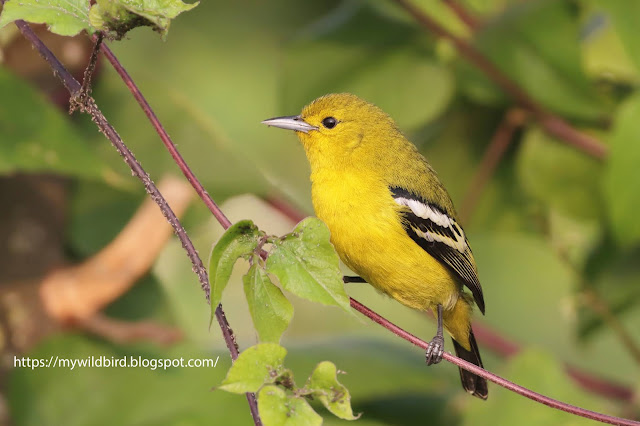
 |
Beauty of Wild Birds |
Common Iora bird (Aegithina tiphia) is a species of bird in the Aegithinidae family.found across the tropical Indian subcontinent and Southeast Asia,
Adult male in breeding plumage has dark green to black upperparts. Wings are black with white wing bars. Tail is blackish. Rump is greenish.
Underparts are bright yellow, with larger white feathers on flanks.
Breeding male has black crown, but face is bright yellow.
Pointed bill is blue-grey. Eyes are black. Legs and feet are slate blue-grey.
Non breeding male has greenish upperparts, almost as female. This one has also greenish upperparts and dull yellow underparts, forehead and eyebrow, and olive-green crown. Wings are grey-black.
HABITAT:
Common Iora lives in forests and well wooded areas, scrubs, cultivated areas and gardens. It avoids deep forests.
DIET:
Common Iora feeds mainly on insects such as grasshoppers, caterpillars, dragonflies and mantises. It also consumes spiders and small insects, fruit, berries and nectar.
Greater necklaced laughingthrush bird (Garrulax pectoralis)
March 09, 2020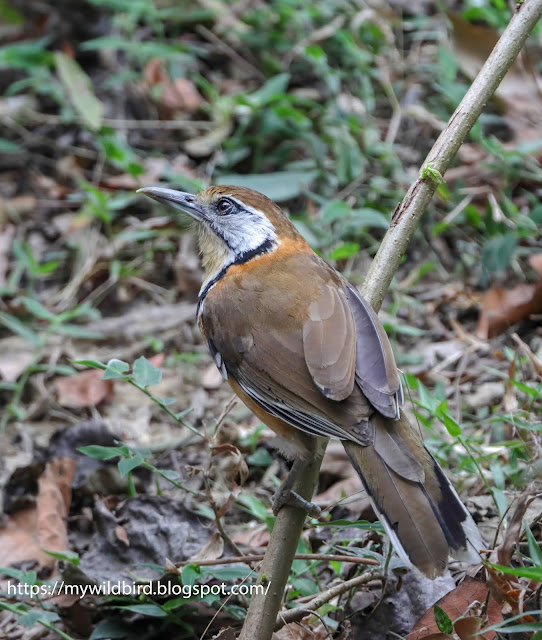

greater necklaced laughingthrush facts
The greater necklaced laughingthrush is a species of passerine bird in the family Leiothrichidae. It is found in Bangladesh, Bhutan, China, India, Laos, Myanmar, Nepal, Thailand and Vietnam.
It is naturally found in Bangladesh, Bhutan, China, India, Laos, Myanmar, Nepal, Thailand and Vietnam. It is introduced to the United States.Its natural habitats are subtropical or tropical moist lowland forests and subtropical or tropical moist montane forests.
Habitat
Broadleaf evergreen forest, mixed deciduous forest and mixed broadleaf-coniferous forest.
Food and feeding
Mostly insects; also some fruits. In Hong Kong study, of ten faecal samples Aug–May, seven contained insects, and all contained fruit

Purple Heron-Ardea purpurea
March 06, 2020
 |
| https://mywildbird.blogspot.com/ |
Purple Heron-Ardea purpurea-The Purple Heron is a large bird, 80-90 cm tall, with a 120-150 cm wingspan, but slender for its size, weighing only 0.5-1.3 kg. Scientific name of this bird: Ardea purpurea. It comes from the Latin: ardia means heron, and purpureus is purple.
Identification: Adult has black crown, black nape-plumes, rufous-chestnut neck with bold black lines down head-sides and neck, dark chestnut-maroon belly/flanks/vent/underwing-coverts, greyish upperparts and mostly yellowish-orange bill/legs/feet. Juvenile resembles adult but has brownish-orange overall plumage and lacks the bold black lines down head-sides/neck.
Range:
Found from Africa, Europe, Central Asia, Middle East, Indian subcontinent, China to Southeast Asia with some northern populations winter south
Habitat: Well-vegetated freshwater wetlands, marshes, lakes and occasionally coastal wetlands and mangroves.
Facebook Page-https://www.facebook.com/beautyofwildbird/
Please don't use these photo anywhere without permission.
Black-headed Ibis -Threskiornis melanocephalus
March 05, 2020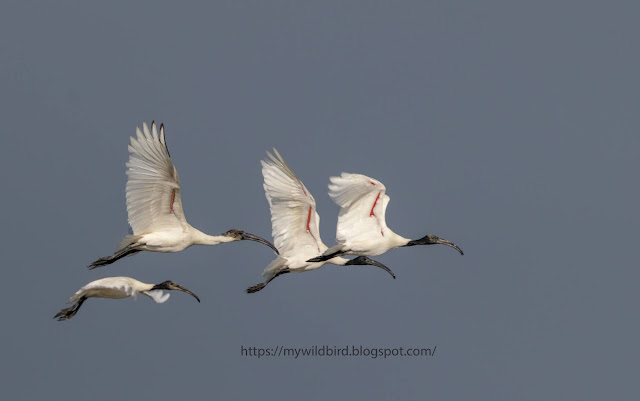
 |
| https://mywildbird.blogspot.com/ |
Black-headed Ibis -Threskiornis melanocephalus
The black-headed ibis or Oriental white ibis (Threskiornis melanocephalus) is a species of wading bird of the ibis family
Description:
Sexes alike. White plumage; naked black head; long, curved black bill; blood-red patches seen on underwing and flanks in flight. Breeding: long plumes over neck; some slaty-grey in wings. Young: head and neck feathered; only face and patch around eye naked. Gregarious; feeds with storks, spoonbills, egrets and other ibises; moves actively in water, the long, curved bill held partly open and head partly submerged as the bird probes the nutrient-rich mud.
Habitat:
marshes; riversides.
Food:
frogs, insects, fish, molluscs, algal matter
Distribution: breeds in the South- and Southeast Asia from India to the west and as far east as Japan.
resident; local migrant; subcontinent, from terai south.breeds in the South- and Southeast Asia from India to the west and as far east as Japan.
Facebook Page-https://www.facebook.com/beautyofwildbird/
Please don't use these photo anywhere without permission.
Cotton pygmy goose-Nettapus coromandelianus
March 03, 2020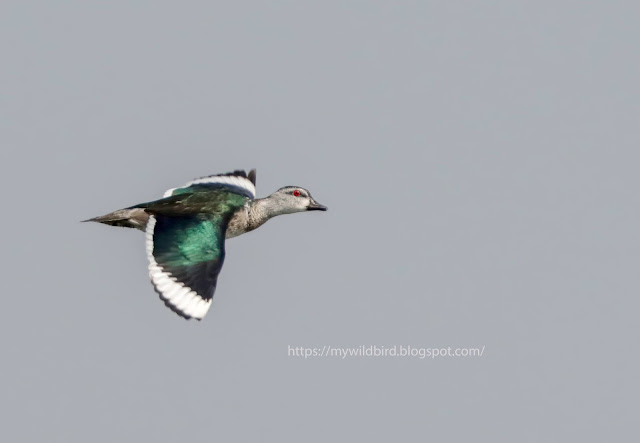
 |
| mywildbird |
Cotton pygmy goose-Nettapus coromandelianus
The Cotton Pygmy Goose or the Cotton Teal, Nettapus coromandelianus, is a small perching duck which breeds in India, Pakistan, southeast Asia and south to northern Australia.
Distribution / Range
It is largely resident, apart from dispersion in the wet season, but Chinese birds winter further south. It nests in tree holes, laying 8-15 eggs.This is an abundant species in Asia, although the slightly larger Australian race appears to be declining in numbers. Found on all still freshwater lakes (jheels), rain-filled ditches, inundated paddy fields, irrigation tanks, etc. Becomes very tame on village tanks wherever it is unmolested and has become inured to human proximity. Swift on the wing, and can dive creditably on occasion.
Diet / Feeding:
Their habitat is still freshwater lakes, where it feeds on seeds and other vegetation, especially water lilies.ts, crustaceans, insects and pond vegetation.
Camera-90D
Lens- Canon 100-400 II is
ISO-400
F-5.6
My Facebook Page- https://www.facebook.com/tareqsclick/
Please don't use these photo anywhere without permission.
Yellow Bittern (Ixobrychus sinensis)
March 03, 2020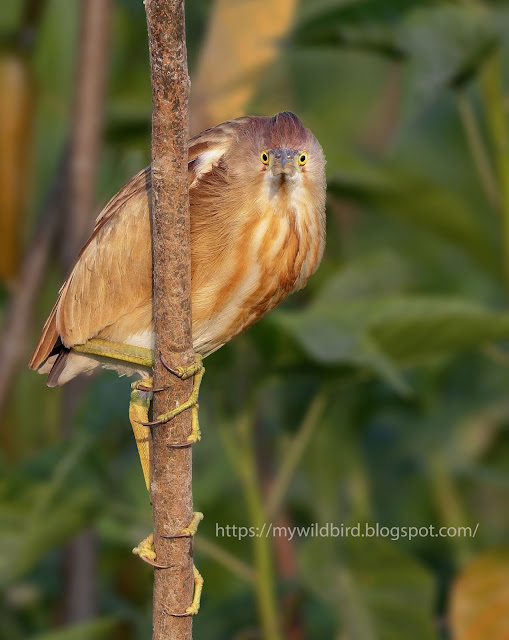

Yellow Bittern (Ixobrychus sinensis)
The Yellow Bittern is one of the smallest bitterns of genus Ixobrychus. It frequents densely vegetated wetlands and reedbeds where it remains hidden and very difficult to observe. It typically feeds on fish, amphibians and insects, sitting motionless in marsh vegetation and waiting for prey.
The Yellow Bittern has large range, but the population trend is uncertain with increase and decrease of some populations. But the species is not currently threatened.
HABITAT:
The Yellow Bittern frequents freshwater swamps and marshes. It can be seen in reedbeds, shrubs and dense aquatic vegetation around rice paddles, lakes and mangrove swamps.
This species occurs mainly in lowland, but in Sumatra, it can be seen up to 1,500 metres of elevation.
BEHAVIOUR IN THE WILD:
The Yellow Bittern feeds primarily on insects, molluscs, crustaceans, frogs and fish. It forages alone in densely vegetated wet habitats, waiting motionless perched on stems just above or at the edge of the water. When a prey comes close to the bird, it rapidly thrusts down with its long, dagger-like bill to catch it. While foraging, it also gleans, runs and hops depending on prey type.
It is mostly crepuscular, and sometimes nocturnal. But it usually roosts at night and during midday on stems or rice stalks.
Please don't use these photo anywhere without permission.


